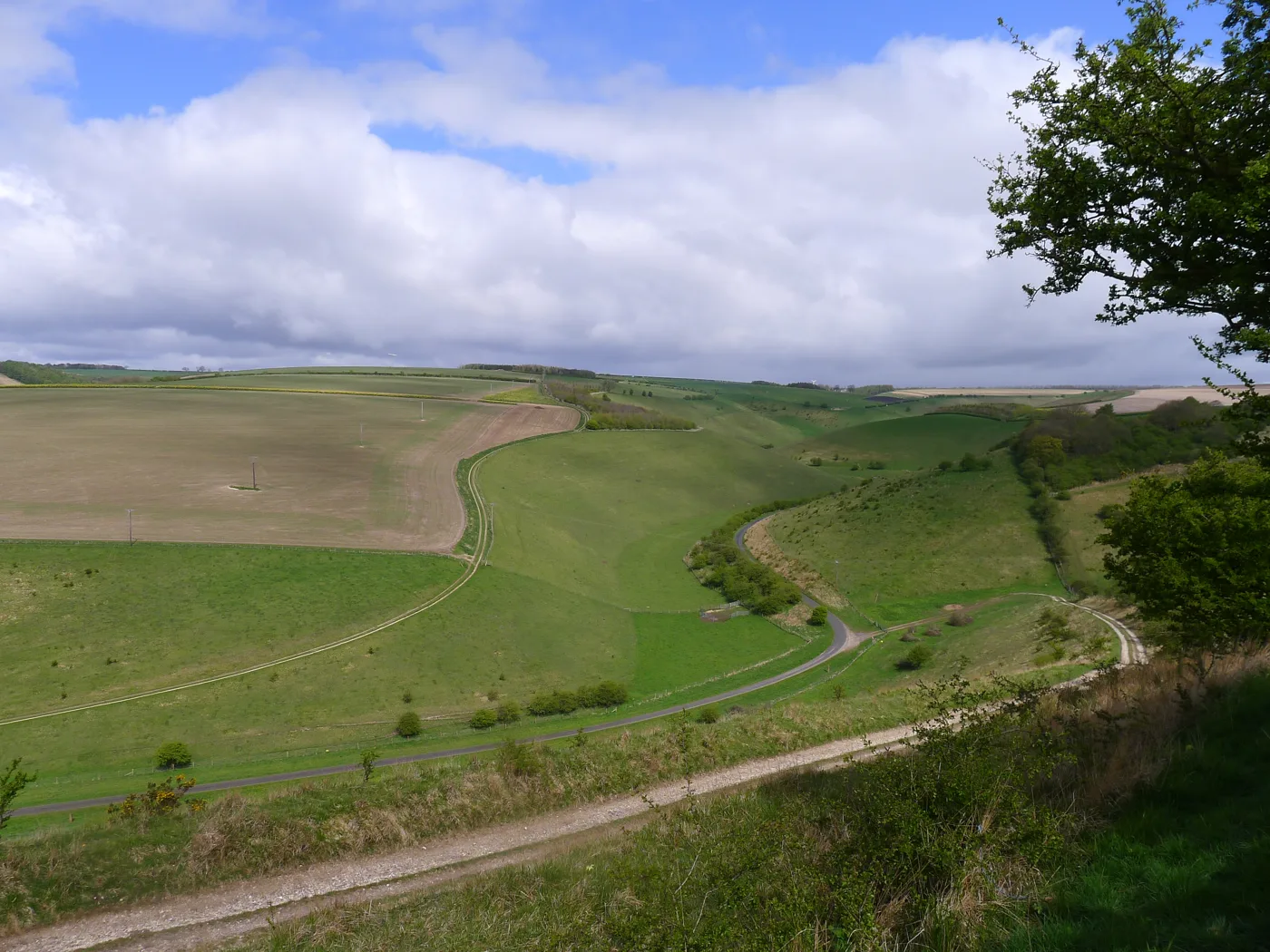

Natural England has submitted the 463 sq km designation order, covering the East Riding and North Yorkshire. It would be England's first new AONB in 30 years.
Natural England has sent the order that would make the Yorkshire Wolds an Area of Outstanding Natural Beauty to the Secretary of State. It covers approximately 463 square kilometres and, if it is confirmed, it would be the first new AONB designated anywhere in England for over 30 years. (Natural England, 8 September 2026)
The order itself is short and precise. It is made under sections 82 and 83 of the Countryside and Rights of Way Act 2000, and it designates land “situated in the unitary authorities of East Riding of Yorkshire and North Yorkshire”, mapped at 1:25,000. (draft Yorkshire Wolds AONB (Designation) Order 2026)
Nothing changes yet. Natural England is explicit that the Wolds gain no new status unless and until the Secretary of State, Dame Angela Eagle, confirms the order. She can confirm it as submitted, confirm it with amendments, or decline to confirm it, and there is no set timescale for that decision. East Riding of Yorkshire Council adds that a refusal or a change could follow a public inquiry. (East Riding of Yorkshire Council, 8 September 2026)
Where the boundary runs
There are two areas, not one.
- The inland area is the arc of chalk wolds and valleys running from Goodmanham, near Market Weighton, north-east to Folkton, a village near Filey in North Yorkshire.
- The coastal area is the Flamborough Headland peninsula and its immediate hinterland, from the Speeton Hills around Reighton in the north, which are also in North Yorkshire, down to the Sewerby cliffs just north of Bridlington.
So a good part of the designation is not in the East Riding at all. Goodmanham, Millington and Sewerby are ours; Folkton, Reighton and Speeton are North Yorkshire, as is Thixendale in the heart of the inland arc. (Natural England consultation, Yorkshire Wolds designation)
What the consultation actually found
Natural England ran its public and statutory consultation from 8 October 2024 to 13 January 2025 and received 251 responses. Of those:
- 78% agreed the proposed inland area should be designated
- 85% agreed for the coastal area
Natural England’s own summary of the wider process puts support “ranging from 80 to 95 per cent across various consultation phases”, which covers earlier rounds as well as this one, and says objections were received and considered. Its conclusion was that there is “a clear weight of evidence” that both areas meet the statutory test of outstanding natural beauty, with minor boundary refinements where needed.
Paul Duncan, Natural England’s deputy director for Yorkshire, said submitting the proposal “marks a hugely significant milestone, not just for the Yorkshire Wolds, but for landscape conservation”.
Councillor Anne Handley, the council’s leader, said: “This is a key milestone, and we’re delighted that Natural England are submitting it to the Secretary of State. The Yorkshire Wolds are a stunning area of natural landscapes that fully deserve national recognition.”
The Wolds order went to the minister alongside a separate proposal to extend the Surrey Hills AONB.
What it means for you
This is the part the press release does not spell out. If the order is confirmed, according to the designation project’s own published answers:
- Planning gets harder for large schemes, not impossible for small ones. Great weight must be given to conserving and enhancing the landscape, and the scale of development should be limited. Applications are not refused automatically.
- Some permitted development rights are withdrawn or restricted. Work you can currently do without planning permission may need it. If you are thinking about an extension, an outbuilding or new cladding inside the proposed boundary, that is the change to watch. Our East Riding planning page tracks the local rules.
- Public access does not change. The project’s answer is flat: “there will be no changes to access rights as a result of designation.” Footpaths, bridleways and open access land stay exactly as they are.
- Farmers gain access to grant schemes such as Farming in Protected Landscapes.
- But all the land becomes a “sensitive area” under the environmental impact assessment rules, which can mean a screening decision before increasing agricultural productivity.
- A management plan becomes compulsory within three years, run by a dedicated management unit. It would be the first coordinated plan the Wolds have had.
(Yorkshire Wolds Designation Project, frequently asked questions)
One discrepancy worth noting
The submission date is given as 8 September 2026 in Natural England’s news release and in the council’s. Natural England’s own consultation page says the order went to the Secretary of State on 7 September. It is a one-day difference on an order with no decision deadline, but we are recording it rather than picking one silently.
Sources
- Natural England, Proposal submitted for new Yorkshire Wolds National Landscape, 8 September 2026.
- Draft Yorkshire Wolds Area of Outstanding Natural Beauty (Designation) Order 2026, Natural England.
- Natural England, Yorkshire Wolds Proposed Area of Outstanding Natural Beauty Designation Project consultation, consultation open 8 October 2024 to 13 January 2025, checked 10 September 2026.
- East Riding of Yorkshire Council, Proposed Yorkshire Wolds Area of Outstanding Natural Beauty (AONB) submitted to Secretary of State, 8 September 2026.
- Yorkshire Wolds Designation Project, frequently asked questions, checked 10 September 2026.
- Parish locations checked against postcodes.io on 10 September 2026.
Have your say